Georgetown grass types for clay soil
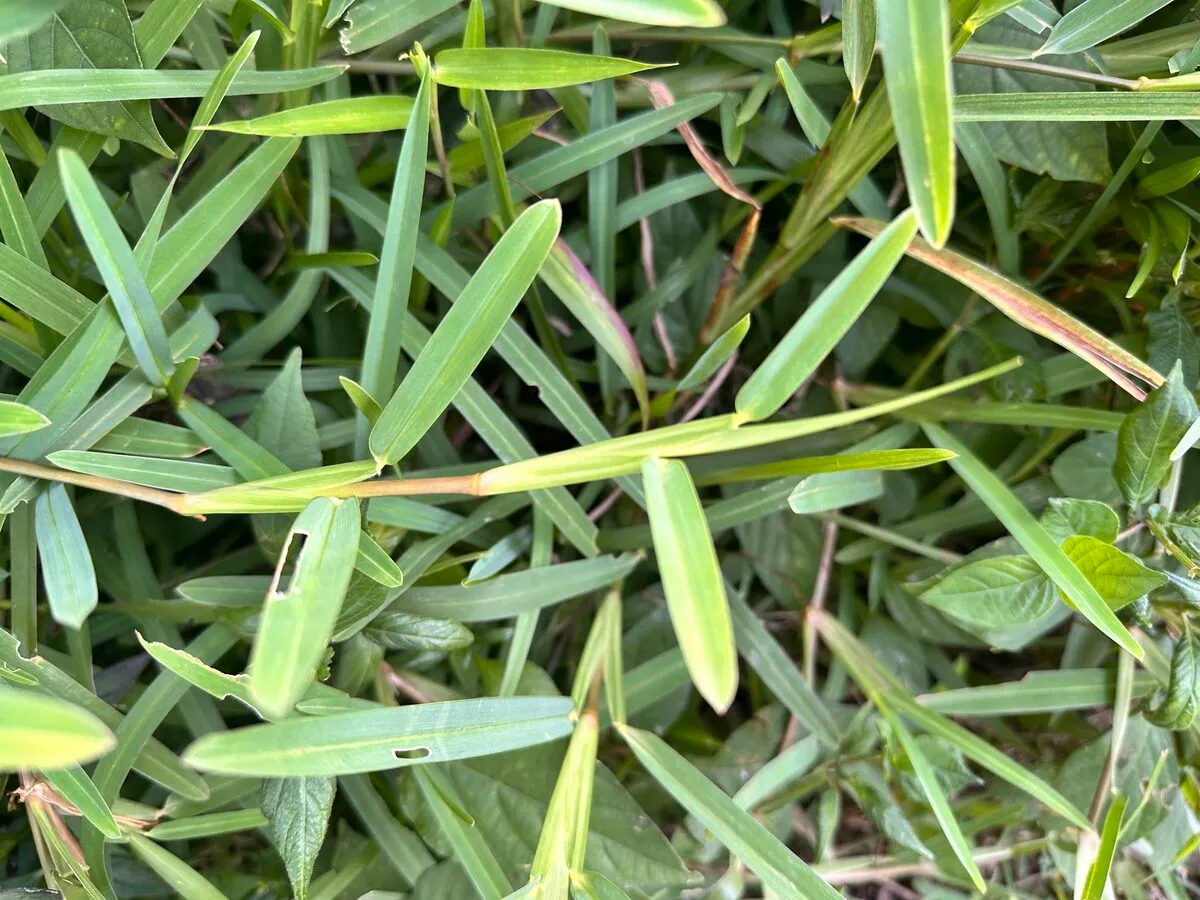
What grass type is in a typical Georgetown lawn?
St. Augustine is the dominant grass in Georgetown's established neighborhoods. Bermuda is common in new builds and full-sun yards, and Zoysia is increasingly popular in higher-end HOA communities. If you are not sure which you have, blade width and mow height sort it out quickly. Texas A&M AgriLife Extension — St. Augustinegrass
Most established Georgetown yards run St. Augustine; newer master-planned sections lean Bermuda Texas A&M AgriLife Extension — Bermudagrass calendar; and Zoysia shows up where an HOA wants a dense, slow-growth look Texas A&M AgriLife Extension — Zoysiagrass Lawn Management Guide. The visual differences below are the fastest way to confirm what is actually under your feet. If you are starting a new lawn or switching grass types, sod installation is how that change usually gets made here, since seed struggles to establish on slow-draining clay.
Why does Williamson County soil matter for your lawn?
Georgetown sits on slow-draining clay. West of I-35 it is clay weathered from limestone (the Georgetown soil series), with bedrock often 20 to 40 inches down; east of I-35 it is deep Blackland clay. Both are very low in permeability, so they compact and drain slowly, and core aeration matters more here than in sandy-soil markets. Aerate in spring or early summer while the grass is actively growing. USDA — Georgetown soil series (Official Series Description)
The two soils are on the record. West of I-35 the USDA’s Georgetown series description is the reference for the limestone-derived clay and its shallow bedrock; east of I-35 the Houston Black series description covers the deep Blackland clay USDA — Houston Black soil series (Official Series Description); and the split along the interstate itself is laid out in AgriLife’s note on Austin-area soils Texas A&M AgriLife — Austin-area soils and the I-35 divide.
Core aeration that pulls 3 to 4-inch plugs relieves the compaction that builds up in high-clay soils. Do it in spring or early summer, when warm-season grass is actively growing, so the lawn recovers fast.
Where the soil runs alkaline, it also changes how you correct yellowing: soil-applied granular iron binds and becomes unavailable to roots Texas A&M AgriLife Extension (Bexar County) — Straight Talk About Iron Deficiency and Plants. Use a foliar iron spray or quality compost instead Texas A&M AgriLife Extension — Earth-Wise Guide to Lawn Problems. For the full month-by-month schedule, see the Georgetown seasonal lawn calendar, and the watering guide for cycle-and-soak on clay.
Where Georgetown’s clay runs alkaline (a soil pH above 7), granular iron spread on the soil binds chemically and never reaches the roots, so the lawn stays yellow. Use a foliar iron spray or quality compost instead.
Why does the same grass behave differently on either side of I-35 in Georgetown?
Because Georgetown sits on two different soils. West of I-35 the Georgetown series is shallow clay over limestone that dries out fast and sheds water. East of I-35 the Houston Black series is deep Blackland clay that cracks open when dry and seals shut when wet. Same grass, same schedule, two opposite failure modes. Texas A&M AgriLife — Austin-area soils and the I-35 divide
The Georgetown series is the soil under most of the city west of the interstate. The USDA describes it as moderately deep, well drained, and very slowly permeable, formed over hard Cretaceous limestone on slopes of 0 to 3 percent. Its official type location is in Williamson County, about one mile south-southwest of the county courthouse, which is about as local as a soil description gets USDA — Georgetown soil series (Official Series Description).
East of I-35 the ground changes to the Houston Black series, the Blackland Prairie soil. The USDA describes it as very deep, moderately well drained, and very slowly permeable, with 40 to 60 percent smectitic clay and extreme shrink-swell: it cracks widely when dry and swells shut when wet USDA — Houston Black soil series (Official Series Description).
The practical difference is that the two soils fail in opposite directions. On the Georgetown series, roots get 20 to 40 inches of soil before they hit bedrock, so the profile holds little water, dries out fast in July, and sheds irrigation as runoff once the surface seals. On Houston Black, the first watering after a dry spell runs straight down the cracks past the root zone; then the clay swells, the cracks close, and the surface turns nearly impermeable, so the next watering pools and runs off. A schedule that keeps a lawn green in a neighborhood west of the highway can leave a lawn east of it alternately drowned and parched.
That is why cycle-and-soak is not optional here: short cycles with a soak break let water move into a profile that either has nowhere to put it or swallows it whole. The watering guide has the timings, and the Williamson County Extension office explains how turf copes when drought stacks on top of clay Williamson County Extension — Turfgrass in Drought.
Which grass survives shallow soil over limestone in Georgetown?
Bermuda handles the shallow, fast-drying Georgetown series best in full sun: it is the most drought- and heat-tolerant of the three. Zoysia is the next choice, especially with some shade. St. Augustine needs the most water of the three and struggles where bedrock is close, unless it gets shade and consistent irrigation. Texas A&M AgriLife Extension — Bermudagrass calendar
Root depth against depth to bedrock is the local test that generic sun-and-shade advice skips. AgriLife’s Bermudagrass calendar lists drought tolerance, heat tolerance, deep rooting potential, and rapid recovery from wear among its strengths, and shade as its weakness, which suits a profile with only 20 to 40 inches of soil as long as the yard gets full sun Texas A&M AgriLife Extension — Bermudagrass calendar.
Zoysiagrass sits in the middle. AgriLife’s Zoysiagrass guide values it for shade tolerance, dense growth, and low maintenance Texas A&M AgriLife Extension — Zoysiagrass Lawn Management Guide, and the Bermudagrass calendar itself points to zoysia or St. Augustine for the shaded areas Bermuda cannot hold. On the shallow west-side soil that makes zoysia the answer where a lot gets some afternoon shade but not enough sun for Bermuda.
St. Augustine stays the shade answer, but it needs the most summer water of the three, and where limestone sits close to the surface it is the first grass to show drought stress. AgriLife’s St. Augustinegrass guide puts its minimum at 4 to 6 hours of sun and more water than Bermuda; on the Georgetown series that means it does best on the shaded, irrigated side of a lot, not the open front yard Texas A&M AgriLife Extension — St. Augustinegrass.
East of I-35 the calculation changes: Houston Black is deep, so root depth is not the constraint, but the wet-dry swing is. All three grasses cope if watering is cycle-and-soak, and the choice there comes down to sun and traffic rather than depth. In a declared drought stage, the Williamson County Extension advice is to keep whichever grass you have alive with deep, infrequent watering rather than switch grasses in midsummer Williamson County Extension — Turfgrass in Drought. If your neighborhood has landscape rules, check them before ordering sod; the Sun City guide covers the strictest set in the area.
How do you tell St. Augustine, Bermuda, and Zoysia apart?
Blade width and mow height are the tells. St. Augustine has wide, flat blades and tolerates partial shade, mowed at 2 to 4 inches. Bermuda has fine, narrow blades, demands full sun, and is mowed at 1 to 2 inches. Zoysia is medium-width and dense, mowed at 1 to 2.5 inches. Texas A&M AgriLife Extension — St. Augustinegrass
| Grass | Blade | Sun / shade | Drought tolerance | Foot traffic | Mow height |
|---|---|---|---|---|---|
| St. Augustine | Wide, flat | Best shade tolerance; needs 4–6 hrs sun | Moderate; needs more summer water | Low; recovers slowly | 2–4 in |
| Bermuda | Fine, narrow | Full sun only; no shade tolerance | High; the most drought-tolerant | High; self-repairs fast | 1–2 in |
| Zoysia | Medium, dense | Full sun to moderate shade | High once established | High; dense and wear-tolerant | 1–2.5 in |
Never remove more than one-third of the grass canopy in a single mow. Cutting too short stresses roots, especially in Georgetown’s clay soil.
The blade, shade, drought, and mow-height figures above follow the AgriLife management guides for St. Augustine Texas A&M AgriLife Extension — St. Augustinegrass, Bermuda Texas A&M AgriLife Extension — Bermudagrass calendar, and Zoysia Texas A&M AgriLife Extension — Zoysiagrass Lawn Management Guide.
Here is what each grass looks like up close in a real Williamson County lawn:
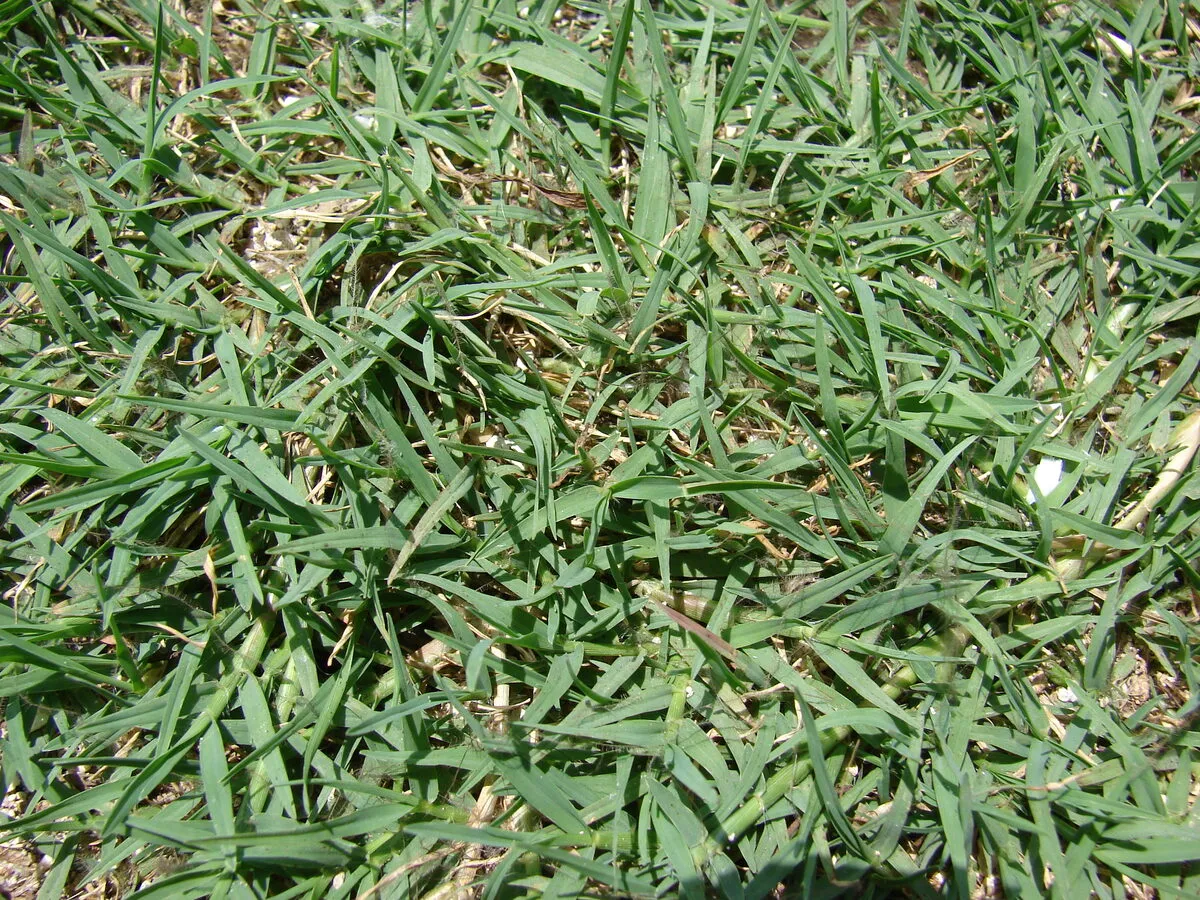
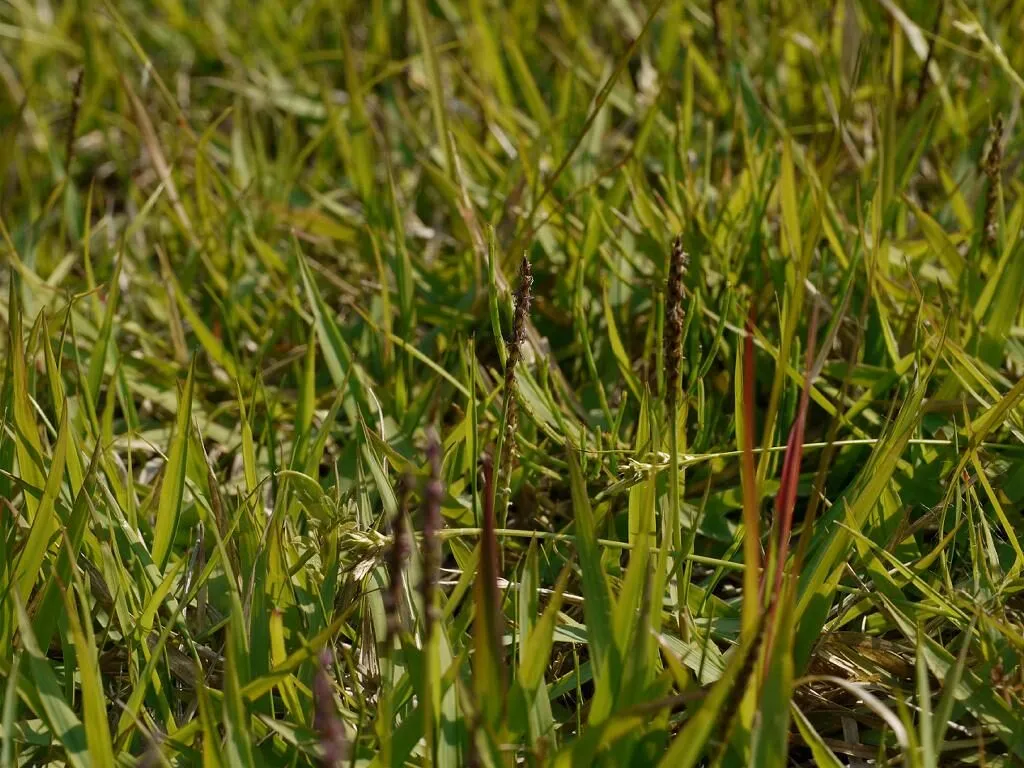
- Full sun, low water: Bermuda, the most heat- and drought-tolerant choice
- Partial shade (4–6 hrs sun): St. Augustine, the most shade-tolerant warm-season grass
- Moderate shade, HOA-friendly: Zoysia, dense and low-maintenance
- Deep shade under mature trees: no warm-season grass survives, so use mulch or shade beds
How do you spot chinch bugs in St. Augustine?
Chinch bugs are the most common St. Augustine pest in Williamson County, and the check window is the hot, dry stretch of summer. Their damage mimics drought stress, so yellowing despite adequate watering is the key signal. Confirm with the coffee-can float test: more than two bugs floating up per four-inch can means an active infestation worth treating. Texas A&M AgriLife Extension — Chinch Bug Management in Lawns
To run the test, remove both ends of a coffee can, press it two to three inches into the soil at the edge of a yellowing patch, and fill it with water. Chinch bugs float to the surface within a few minutes. For the full spot-test-treat walkthrough, see the chinch bugs guide.
When should you call an operator?
Match the symptom to the cause. Yellowing despite watering points to chinch bugs or fungal disease. Brown patches after heavy rain are usually fungal. Uneven growth usually resolves with core aeration, and thinning in shade often means a grass-type mismatch. No green-up by late April suggests pest or disease damage, not dormancy. Texas A&M AgriLife Extension — St. Augustinegrass
- Yellowing despite watering: chinch bugs or fungal disease.
- Brown patches after heavy rain: fungal disease, common in slow-draining clay.
- Uneven growth in an established yard: usually resolved by core aeration.
- Thinning in shaded areas: often a grass-type mismatch (Bermuda in low sun).
- No green-up by late April: suspect pest or disease damage, not normal dormancy.
If any of those match your lawn and you would rather not diagnose it yourself, you can have a local Georgetown pro handle it.