Brown patch and take-all root rot in Georgetown lawns
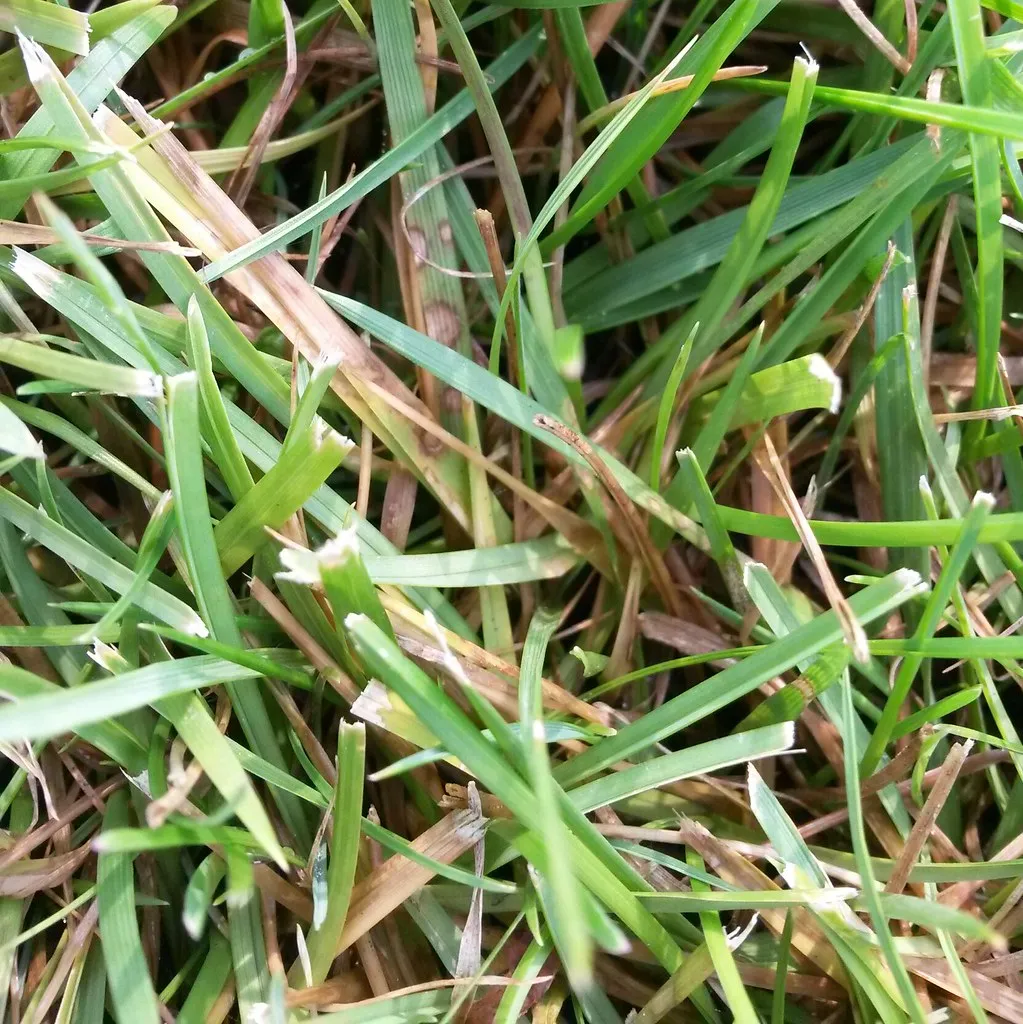
Brown patch or chinch bugs? Start with the season.
Timing is the fastest tell. Circular patches that appear in the cool, wet shoulders of spring and fall are almost always a fungal disease: brown patch (large patch) or take-all root rot. Irregular patches that spread in the hot, dry heat of mid-summer point to chinch bugs instead. Georgetown's slow-draining Blackland clay and alkaline soil make both fungal diseases common, so a lawn thinning out in March or November is a disease question, not a bug question. Texas A&M AgriLife Extension — St. Augustinegrass Lawn Management
Two fungal diseases account for most spring and fall patch problems on St. Augustine in Williamson County: brown patch, which AgriLife now calls large patch, and take-all root rot. They look similar from a standing height but call for very different fixes, and neither responds to the extra watering people reach for first. If you are not sure what grass you are even looking at, start with the Georgetown grass types guide.
What does brown patch (large patch) look like?
Large patch (Rhizoctonia solani) shows up as roughly circular patterns in the turf with a yellow-to-orange outer border, active in the transition seasons of fall and spring. The fungus attacks the lower crown and leaf sheath, so the diagnostic test is simple: diseased shoots pull away easily from the sheath while the runner stays rooted in the ground. It is driven by leaf wetness, poor drainage, heavy thatch, and early-fall nitrogen. Texas A&M AgriLife Extension — St. Augustinegrass Lawn Management
The conditions that trigger large patch are mostly things you control: over-irrigation during cool weather, soil that drains slowly, a thatch layer thicker than half an inch, and nitrogen applied too late in the fall. All four are common in Georgetown, where heavy clay holds water and homeowners often push a late feeding before winter.
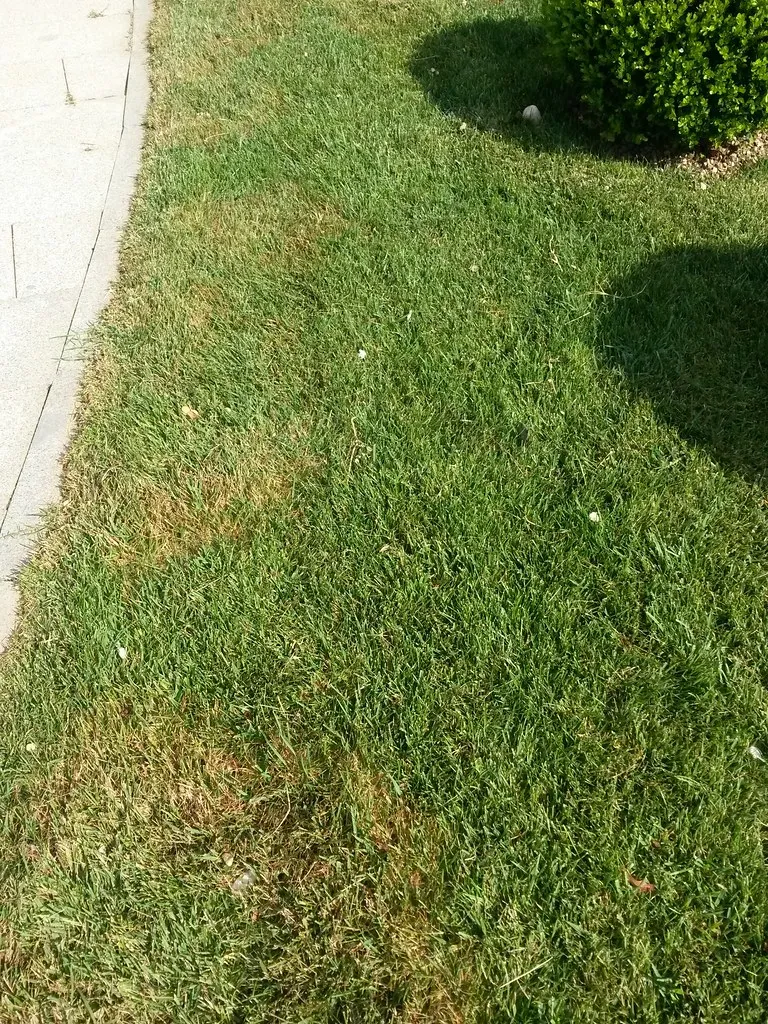
Fungal damage in warm-season turf: bleached, straw-colored blades through the canopy. The pull test is what separates the diseases below, since at a glance large patch, take-all, and even drought can all look like this.
What is take-all root rot, and why is it so common in Georgetown?
Take-all root rot (Gaeumannomyces graminis var. graminis) is a soil-borne fungus most prominent in spring and early summer as grass comes out of dormancy. It rots the roots, leaving them short and blackened, so the lawn yellows, wilts, and thins into irregular brown patches one to twenty feet across. It is strongly favored by alkaline soil above pH 7, which is why Georgetown lawns are so prone to it. Texas A&M AgriLife Extension — Take-All Root Rot
This is where local soil matters. Georgetown sits on Houston Black and related Blackland Prairie clays, which the USDA describes as very slowly permeable and moderately alkaline, with pH commonly above 7.5. Because take-all thrives above pH 7, our lawns are naturally predisposed to it, and the slow drainage that comes with this clay keeps the surface wet enough to feed it. Williamson County AgriLife treats it as a routine local problem and recommends acidifying compost topdressing as the core fix.
How do you tell large patch, take-all, and chinch bugs apart?
Pull on the grass and look at the roots. If shoots detach from the sheath but the runner stays rooted, it is large patch. If you can lift the whole runner cleanly off the soil because the roots are rotted, it is take-all root rot. If the roots are intact and the damage is spreading in hot, dry summer weather, it is chinch bugs, which you confirm with the coffee-can float test. Texas A&M AgriLife Extension — St. Augustinegrass Lawn Management
| Clue | Large patch (brown patch) | Take-all root rot | Chinch bugs |
|---|---|---|---|
| Worst season | Cool, wet spring and fall | Spring into early summer | Hot, dry mid-summer |
| Patch shape | Circular, yellow-to-orange border | Irregular, 1–20 ft across | Irregular, expanding in full sun |
| The pull test | Shoots pull from the sheath; runner stays rooted | Whole runner lifts off; roots black and rotted | Roots intact; nothing lifts |
| Confirm with | Sheath pull + season | Root inspection + soil pH | Coffee-can float test |
For the bug side of this table, the Georgetown chinch bug guide walks through the coffee-can test step by step. The key reflex to unlearn: yellowing grass does not automatically mean it needs more water. In spring and fall, more water usually means more fungus.
Do not mow a lawn with an active brown patch outbreak: the mower carries the fungus across the yard and seeds new rings. And do not water in the evening. Wet blades overnight are exactly what these fungi need, so shift irrigation to the early-morning window.
How do you manage lawn fungus in Georgetown clay?
Cultural practices do most of the work. Water deeply and infrequently in the early morning, between 3 and 9 a.m., never in the evening. Mow St. Augustine at 2 to 4 inches with a sharp blade and stop mowing during an active outbreak. Keep thatch under half an inch, core-aerate compacted clay, and hold the last nitrogen feeding to 4 to 6 weeks before the first frost. For take-all, topdress with acidifying compost or peat to nudge the surface pH down. Texas A&M AgriLife Extension — St. Augustinegrass Lawn Management
Georgetown’s watering rules and its clay push in the same direction here, which is convenient. The city limits irrigation to two assigned days per week and bans watering from 9 a.m. to 7 p.m., per the City of Georgetown Water Utility schedule. If you dump all of that into the evening slot, the lawn stays wet overnight and fungus wins. Water in the morning window instead, and split it into short cycle-and-soak bursts so the clay can absorb it rather than running off. The Georgetown watering guide has the full cycle-and-soak schedule by address.
For take-all specifically, Williamson County AgriLife has local trial guidance on peat-moss topdressing to lower surface pH and let the turf outgrow the fungus. Compost works on the same principle and improves the clay at the same time.
When is a fungicide actually worth it?
Mostly for large patch, and mostly as prevention. Fungicide is most effective applied in fall before symptoms appear, in lawns with a chronic disease history, when soil temperatures drop into the 50 to 70°F range. For take-all root rot, fungicides rarely work on their own because the pathogen lives in the soil, so cultural fixes are the real control. Reaching for a fungicide after the lawn is already thinning is usually too late and too expensive for the result. Texas A&M AgriLife Extension — Take-All Root Rot
The practical takeaway: spend your effort on watering timing, mowing, thatch, fertilizer timing, and soil pH first. Those fixes address the cause. A fungicide only ever buys time on the symptom, and only large patch responds to it reliably. An operator with lawn-treatment capability, not just mowing, can confirm which disease you have and apply the right product at the right time.
Patches in your lawn and not sure what is causing them?
Match the symptom to the cause first. Circular rings with a yellow-to-orange border in cool, wet weather are brown patch; runners that lift off rotted roots in spring are take-all; irregular patches spreading in dry summer heat are usually chinch bugs. When you want a second set of eyes, get matched with a Georgetown operator who treats lawns, not just mows them. Texas A&M AgriLife Extension — St. Augustinegrass Lawn Management
Fungus, bugs, or drought all look like brown grass from a standing height, and treating the wrong one wastes money and time. Get free quotes from a Georgetown operator who can confirm the disease and apply the right product at the right time, or compare the look of pest damage in the chinch bug guide first.